December 31, 2013

The Railway Children - Reunion Wilderness (1987/2001) / Recurrence (1988) / Native Place (1990)


It is hard to over-estimate the influence of The Smiths on the revival of guitar-pop in England during the mid-to-late 1980s. Rather than being a London-based phenomenon, this revival emanated from the north, and just as it had during the rise of post-punk, Thatcher-era Manchester proved a particularly fertile ground for this unique integration of sixties-era guitar-pop and post-punk moodiness. Hailing from Manchester, The Smiths largely created the blueprint for much of what was to follow for the remainder of the decade; however, the influence of Scottish bands such as Orange Juice and The Scars, as well as Liverpool bands such as Echo & The Bunnymen and The Teardrop Explodes also informed this guitar-pop resurgence. In the summer of 1983, a group of Wigan teenagers from the outskirts of Manchester led by Gary Newby (songwriter/vocalist/guitarist) formed a band that, while featuring the jangly guitar-oriented sound that was quickly coming into vogue at the time, pursued a gentler approach to better feature Newby's subtly expressive vocals. Newby: "I was friends at school with Stephen Hull our bass player. We were in a couple of different bands together that never actually played any gigs. Then we met our drummer Guy Keegan, probably around '83, and started rehearsing as a three piece and playing bars and clubs around Wigan. We did mainly stuff I'd written plus a few covers, things like 'Crocodiles' by Echo & The Bunnymen or 'Figurehead' by The Cure. Brian Bateman joined on rhythm guitar, and the next big step came when we started playing clubs in Manchester, around '84. We eventually hooked up with our manager, Colin Sinclair, after various encounters, gigs, and demo tapes, including an aborted session with Martin Hannett. Colin owned a live venue and rehearsal studio just around the corner from the Hacienda, called The Boardwalk." After naming the band after a children's book by Edith Nesbit published in 1905, Newby, Hull & co. began gigging in and around Manchester and quickly built a devoted following due to their unique "gentle" sound, which culminated in a recording contract with the legendary Manchester independent, Factory Records.

Newby: "Being on Factory was an amazing experience. There was a real buzz around rehearsing and putting the material together for what would be our first releases. We had a room at the top of the Boardwalk building next door to where James rehearsed. The Happy Mondays also rehearsed there along with some other Factory bands like ACR [A Certain Ratio] and Kalima. There was always bands coming and going. We'd grown up listening to Joy Division and New Order, and Tony Wilson was an inspirational character. I think we thrived in that atmosphere because it was completely unstructured and unpressured." Factory's penchant for allowing their artists to develop and explore their sound in an environment free of corporate interference payed dividends for The Railway Children. They released their first single, "A Gentle Sound," in 1986, and the following year, their debut LP, Reunion Wilderness, reached #1 on the UK indie charts. Reunion Wilderness features one of the band's best songs, "Brighter," a fine piece of avowedly romantic jangle-pop that certainly put them in line with much of the C86 crowd; however, the band's immediate success and Gary Newby's polished vocals suggested the band was far more marketable than many of their peers. And the majors did come knocking. It was Richard Branson of Virgin America who convinced the band to leave the nurturing confines of Factory, and though the short-term results were a bigger recording budget and a significant expansion of their fan base, jumping to a major label did have its drawbacks, as Virgin began to push them in an increasingly commercial direction. Newby: "After the release of Reunion Wilderness, we had a lot of interest from other companies, and I suppose we got seduced by the bright Lights. Looking back, we probably should have stayed with Factory for at least another album, and grown a little."

Staying on a little longer at Factory would have indeed been a good decision because the band's stint at Virgin was fated to be not only stormy, but ultimately fatal. Nevertheless, things did seem promising at the start. The Railway Children's second LP, Recurrence, was released in 1988, and they soon found themselves touring Europe and America with the likes of R.E.M. and The Sugarcubes. The album itself finds the band hitting their stride in terms of songwriting; "In the Meantime" is a particularly fine example of this. However, Recurrence bears the imprint of Virgin's influence on the band's sound, as it pushes them slightly away from the pure guitar-pop of their earlier work and into a more produced, at times even mainstream, direction- but the songs are good enough to consistently overcome this. And in light of the creative struggles that lay ahead for the band, Recurrence sits as The Railway Children's most fully-realized work. Despite its obvious quality, the album failed to meet Virgin's commercial expectations, and by the time The Railway Children's third album, Native Place, was released in 1990, the band, at the behest of their label, was out to score a chart hit, which they achieved with "Every Beat of the Heart," a song with a noticeably dancier, chart-friendly sound. Perhaps ironically, this would spell the end of The Railway Children's flirtation with mainstream success. Within two years, Virgin would be swallowed up by EMI, and the band found itself without a label. Completely fractured by their loss of direction, The Railway Children decided to split in 1992- a band whose early work suggested something unique and full of promise but whose creative flame was decimated by a major label's insistence on compromising artistic integrity for mainstream appeal: another cautionary tale to be sure.

The Railway Children - "Brighter" (1987)

Wigan indie-poppers offering up some choice jangle

December 30, 2013

The Jesus & Mary Chain - "In a Hole" (1985) Old Grey Whistle Test

Aside from being the coolest clip ever (wait for the ending!), this song couldn't describe any more accurately the unbearable sadness and isolation dancing through my mind right now.

The Servants - Reserved (2006) / Disinterest (1990) / Small Time & Hey Hey We're the Manqués (2012)


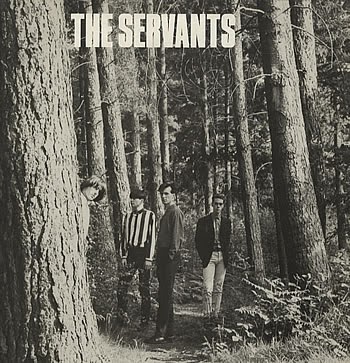
Led by the vastly under-appreciated singer and songwriter David Westlake, who has more than once been described as a post-punk version of Ray Davies, The Servants, formed by Westlake in 1985, were a natural yet reluctant fit among the figureheads of the guitar-pop resurgence that took hold in England during the mid-late 1980s, a movement that retroactively came to be known as "C86." Westlake, who hailed from Hayes, Middlesex, had already connected with guitarist John Mohan when he placed classified ads in a number of London music publications in the hope of putting together a proper band. Among the respondents was future bassist Phil King (who would go on to play in bands such as Felt, The Jesus & Mary Chain, Biff Bang Pow! and Lush). Phil King: "As for joining the Servants, I seem to remember seeing an ad looking for a guitarist in the back of the ‘NME ‘around 1984. I am trying to remember the groups it mentioned in the ad. The Smiths, the Go-Betweens, Orange Juice' maybe? I remember there being a phone number and David's address in Hayes, Middlesex [....] David had sent me a demo tape of some songs that included a rather primitive version of 'She's Always Hiding' with no bass on it. I was of course knocked out by it, and both the songwriting and John Mohan's guitar playing. I was so excited by the tape I took it upon myself to drive over to his place one Friday evening in my 1964 two tone blue Humber Sceptre [....] David was of course rather surprised at my unannounced arrival but we got on very well, and arranged to meet up for a rehearsal in his bedroom with John Mohan the next week. We soon realised that we had one six string guitar too many, so I ended playing a black short scale Fender Musicmaster bass (there was also a Peavey combo bass amp there too) that had been left by their friend Ed who had tried - and failed - to master it. And that's how I started, and still play, bass." The new partnership of Westlake, Mohan and King paid off in a batch of promising songs, and after having named the band after the 1963 Harold Pinter-written film The Servant, they booked their first gig in King's Cross, London.

Cover of "The Sun, a Small Star" Single
King: "I remember years later David telling me that I gave him an ultimatum after we'd spent about a year rehearsing in his bedroom - with a drum machine - and recording demos on a 4 track Portastudio, that either we started playing some gigs or I'd leave. I have no memory of this but I guess the reason I said that, if I indeed did, was because I was so proud of the songs I just wanted everyone to hear them. Once we got a drummer (one of the earlier ones, Eamon Lynam, was nicknamed 'Neasden Riots', in the same way that the Clash's drummer Terry Chimes was called 'Tory Crimes' on the back of their first album, because he'd got into a bit of 'trouble' in the neighbourhood and was put under a strict curfew by the police), it all snowballed pretty quickly from our first show supporting the Television Personalities at the Pindar of Wakefield in Kings Cross in July 1985 to our last performance supporting Felt (the 'Lawrence Takes Acid' show) at Bay 63 around a year later." After only a few gigs, the band was signed to Head, an off-shoot of Creation Records, and in early-1986 released their first single, "She's Always Hiding," which garnered them much critical praise lauding their unique sound. For example, NME wrote, "Stop me if you've heard this one before, but there's currently a group of earnest young men doing the rounds of London's beery backrooms who play the sweetest, smartest evocations of The Velvet Underground's sepulchral third LP these increasingly '60s-sated, guitar-jaded ears have possibly ever heard. Still awake? Good, because The Servants (for it is they) are - wait for it - different. Not for them the simplistic allure of dark shades and darker strides, nor the convenient kudos of easy chords. No, what brings The Servants close to Lou's crew's gossamer grace-cum-disembodied depth is that self-same timbre; the giddying suggestion of melodies conjured from the ether; a recognition of enduring classicism; a similar striving for a sound as perfect, as profound as (eek!) silence. Heck, their "She's Always Hiding" is the greatest dark-eyed, love/hate song Reed never wrote..." On the heels of the first single, and only eight months after their first gig, The Servants were invited to record a John Peel session in March, 1986 and were also chosen to appear on NME's C86 compilation cassette. However, Westlake, whose ambitions always leaned heavily in the direction of "art for the sake of art," was quite discomfited by the band's meteoric rise; as a result, he only reluctantly agreed to contribute a song to the NME compilation, and the song itself, "Transparent," was a B-side. Despite such early success, this first version of The Servants was destined to fall apart by the end of 1986.

King: "We put out two singles (the second 'The Sun, A Small Star' sadly posthumously, as we'd split up by then), recorded a John Peel session, got a full page feature in the New Year's edition of the 1986 ‘NME’ hailing us as the next big thing, appeared on their C86 cassette and played shows with amongst others the Jesus And Mary Chain, Felt, Primal Scream, the Go Betweens, the Pale Fountains and the Wedding Present. By the time we split up we'd only done twenty four gigs. To use the snowball analogy, I guess it all gathered momentum a little too quickly for David, got out of control, crashed into a tree, and um, broke up. It was just a shame really as we had so many songs to record. Enough for a few albums." Ironically, this is where the story of The Servants would have likely ended if not for the song Westlake had begrudgingly contributed to NME's C86 compilation; the mail-order-only cassette had become a huge success (eventually released as an LP), providing a catalyst for the rise of an all-too-brief D.I.Y. guitar-pop resurgence in the UK. Inspired by the enthusiastic support of John Peel, Westlake decided to reform the band, which now included guitarist Luke Haines (who would later find fame leading The Auteurs and Black Box Recorder). Haines recalling his move to London where he was to shortly cross paths with The Servants: "Brixton was kind of heavy at that time, not like it is now full of middle class people. It was good and full of rastas and good fun.  I was sort of a nice middle class boy who had gone to music college and what not, not much, just a couple of days a week. It didn't require much of my presence [....] I had a few attempts at bands and what not in the mid-80s. Then I answered an advert in Sounds Magazine [...] for a band called The Servants who needed a guitar player, so I answered that advert and I kind of got the gig. I was then in The Servants for about five years or something. Unfortunately, The Servants had already had their, I suppose, day in the sun prior to me joining them. So I essentially joined a band that was struggling quite a lot. I mean even in the mid-to-late eighties guitar bands didn't expect to sell any records. You did it purely for artistic reasons. You know, there wasn't really this idea that you could be a big pop star- that all came later on in, I suppose, the nineties." Soon thereafter, The Servants were signed to Creation Records, who immediately began pressuring them for an album. After filling out the new version of the band, Westlake, Haines & co. entered the studio to record a batch of new songs; however, Creation mysteriously chose to only release a mini-album, and did so as a David Westlake solo album, titled Westlake, which was barely heard.  By the end of the 1987, Creation had unceremoniously dumped the band.

December 27, 2013

Notes from the Paisley Underground: The Long Ryders - 10-5-60 EP (1983/2011) / Native Sons (1984/2011) / State of Our Union (1985/1990)


While Uncle Tupelo is commonly credited with spearheading the rise of the alt-country movement (referred to in some quarters as "No Depression") that flourished throughout the 1990s, its true origins can be traced back to a number of Los Angeles-based cow-punk bands that inhabited the margins of the Paisley Underground scene during the early 1980s. Bands such as Tex and The Horseheads, Blood on the Saddle, The Beat Farmers, Rank and File and many others helped pioneer the unique fusion of country music and punk that would profoundly inform alt-country stalwarts Uncle Tupelo, Wilco, and Whiskeytown a decade later; however, no cow-punk band was more influential or as talented as The Long Ryders who integrated influences such as Gram Parsons, The Byrds, and Buffalo Springfield into a harder-edged punk-infused sound. The seeds for what eventually became The Long Ryders were sown in an uber-obscure and militantly retro Los Angeles garage-psych band called The Unclaimed, which Sid Griffin had joined in 1978 after tiring of the then-nascent punk scene. However, Griffin soon felt trapped by the band's unwillingness to broaden their mid-sixties aesthetic and consequently left in late 1981 to form the nucleus of what would quickly evolve into The Long Ryders, which early on included Steve Wynn who soon left to form The Dream Syndicate. Fatefully, the band's formation coincided with the beginnings of the Los Angeles-based pysch-rock revival that eventually (and quite reductively) came to be known as the "paisley underground," a scene that actually featured an eclectic mix of bands that were linked together more through strong friendships and an ethos of mutual support than any sense of a shared musical approach.

Sid Griffin: "There was tremendous sharing in those days. At first everyone was on equal footing and then some bands became rather possessive and a bit more private but the Long Ryders were always looking at things from a socialist perspective. People shared amps, guitars, worked for other bands [...] Steve Wynn put out the early Green on Red album, I worked doing merch for several bands, Matt Piucci of Rain Parade became a kinda guitar roadie if you needed help like that and the Bangles sang back up on a lot of other people's records. Many of the bills of the day were three of these bands all at once. Perhaps Bangles, Dream Syndicate, Long Ryders, something like that." The early days of The Long Ryders featured several lineup changes, but their debut EP, 10-5-60, produced by former Sparks guitarist Earl Mankey, established the band as peerless exponents of the kind of country-infused jangle-pop The Byrds were doing in their post-Sweetheart of the Rodeo incarnation. Starting with the stellar Griffin-penned jangle rave-up "Join My Gang," a song that might actually be better than a good percentage of the material many claim it is emulating, and also featuring the raucous title track, a garage-rock holdover from Griffin's days in The Unclaimed, 10-5-60 finds the band on the precipice of greatness. Following the release of 10-5-60, the band's bass player, Des Brewer, jumped ship to resume his career as a longshoreman, which apparently appealed to him more than touring; as a result, Tom Stevens, who at the time was working at a record store, joined The Long Ryders, thus ushering in the band's classic line-up. Having recently signed to Frontier Records, the band entered the studio with producer Henry Lewy whose résumé included the first two Flying Burrito Brothers LPs, and the result, their first full-length LP, Native Sons, represents a step away from the occasionally literalistic approach of 10-5-60 and step towards something approximating what Gram Parsons once described as "cosmic American music."

 Tom Stevens: "From the start, The Long Ryders were all about hybrids of pure American styles of music, as mostly defined by 60s bands, both rock and country. That all distilled through skilled songwriting into more of the classic style that you hear on Native Sons [....] I think at the time The Long Ryders were at the very height of their songwriting powers, and ability to naturally hybrid cool styles into a single form." From the opening track, "Final Wild Son," a snarling paisley update of Bob Dylan's "Highway 61 Revisited," to "Wreck of the 809," a psych-drenched version of R.E.M.-style Jangle-Pop, to the brilliant single, "I Had a Dream," a song that manages to stand shoulder to shoulder with the band's formidable influences (Griffin's vocals can't help but recall Gene Clark) and to lay out a sonic blueprint that would keep Jeff Tweedy busy for the better part of a decade, Native Sons stands as The Long Ryders' masterpiece. State of Our Union was the band's second full-length and first major label release. While there is a palpable production sheen cast over the proceedings, it ultimately lends this brilliant set of songs a certain punchiness that serves the music well. The album kicks off with a stone-cold classic in "Looking for Lewis and Clark," a powerful political anthem that sets out to punch a few holes in Reagan's "morning in America" myth. Another standout is "Here Comes That Train Again," a gorgeously spacious piece of jangle-pop that repeatedly conjures the ghost of Gram Parsons. Although it is arguably over-produced, State of Our Union is one of the most beautiful and enduring albums to emerge from the paisley underground scene as well as one of the most eloquently political albums of the 1980s. Drummer Greg Sowders: "we wanted to control our own art and it was just a very do-it-yourself attitude that we learned from the punks. But ultimately we thought punk rock in L.A.- I do kind of exclude X because they were very musical- but a lot of them really sucked [....] But that do-it-yourself attitude and the 'we want to control everything ourselves and deal directly with the fans'- that's what we learned from the punks. Plus, we liked to play our songs kinda fast."

The Long Ryders - "Looking for Lewis & Clark" (1985) Old Grey Whistle Test

Great great paisley band, channeling The Byrds & the Burrito Bros...

December 25, 2013

The Jesus & Mary Chain - "Just Like Honey" (1985)

jlw

"Listen to the girl
As she takes on half the world
Moving up and so alive
In her honey dripping beehive
Beehive
It's good, so good, it's so good
So good"

Crispy Ambulance - Fin (1985/1990) / Scissorgun (2002) / The Powder Blind Dream (2004)


While Crispy Ambulance was certainly no stranger to sonic experimentation in the studio, their live performances were where they let their more aggressive sonic tendencies reign supreme. In early 1982, preceding the release of The Plateau Phase, the Crispies joined a European tour organized by Wally Van Middendorp, front-man for Dutch post-punk minimalists, the Minny Pops, which they headlined with Factory Benelux label-mates Section 25. All eight shows were recorded by Section 25 soundman John Hurst, and these tapes became the source of the cassette-only 1983 release, Open Gates of Fire. Ironically, it would be this release, along with the cassette-only compilation, The Blue and Yellow of the Yacht Club, that would finally garner Crispy Ambulance the critical praise they had been denied following the release of their stunning debut album. Soon after, a full critical reappraisal of the Crispies took place, and The Plateau Phase, once summarily written off by critics as a purely derivative work, was now being hailed as a masterpiece; for example, David McCullough called it an album that "wasn't only ahead of its time, it seemed to have invented its own time [...] and still ranks as a monster of an album." Nevertheless, by the time people had finally begun to listen, the band had already decided to call it quits, soon thereafter reforming as the thoroughly forgettable Ram Ram Kino before fading from memory for the next seventeen years.

 A full three years after the band's demise, much of the live material from 1981/1982 originally collected on Open Gates of Fire was given a more proper release as Fin, an album more than worthy of being the epitaph for Crispy Ambulance's original run, but also an album that begs the question: what if they had recorded a second studio album? These live performances caught the band both on a creative ascendance and heading toward dissolution; as such, Fin demonstrates a sound quite different from earlier Crispy Ambulance recordings. One of the album's obvious highlights is "The Plateau Phase," which did not appear on the album of the same name. Recorded in Brussels in early 1982, the song has a nervy, scratchy, doom-drenched quality that builds tension behind Hempsall's wandering, languorous vocals. Another standout is "Choral," a song never recorded in the studio due to some resistance within the band to exploring a more overtly electronic-based sound. Nevertheless, on Fin, the song comes off as a charging kraut-rock inspired gem that features some nice guitar-work by Davenport and a particularly ominous vocal performance by Hempsall. The posthumous release of this live album only furthered the Crispies' meteoric rise in the esteem of the critics. Writing in response to the re-issue of Fin in 1990, NME wrote, "Long before Manchester crawled back into flared trousers, bands such as Crispy Ambulance were busily painting their city black with urban mood music. The Crispies were doomed at the time by being compared to Joy Division, but as this record shows, they were much looser and far less serious than the mighty JD [....] Too bad this fine band ended up in the casualty ward." Indeed!

For the better part of a decade and a half, Crispy Ambulance was little more than an afterthought, an obscure corner of the Factory Records legacy, but at the end of the 1990s, with post-punk quickly coming back into vogue, the Crispies quite unexpectedly re-materialized. Alan Hempsall: "We reformed in 1999 because our back catalogue was to be re-released on CD so we thought it would be good to promote it and also fun. The reaction surprised us and a lot of people started to say why not write some new stuff [....] none of it was planned; it just happened by accident." Initially recording and releasing the live Accessory After the Fact, the real fruit of the Crispies reunion would appear a few years later in the form of their long-belated second studio album, Scissorgun, produced by Graham Massey of 808 State fame, which finds the band in brilliant early-1980s form, if not showing slightly more polish around the edges. Hempsall: "I'm not sure a seventeen year layoff preserves your anger. I certainly found it tempting to do something a little more laid back but that definitely wouldn't be in our true style. At first I found it quite hard to work myself up for that but it gets easier [....] Everybody who knows our music seems to be of the opinion that it seems like we're picking up exactly where we left off and whilst that wasn't deliberate on our part it's something I'm very pleased about."  When listening to Scissorgun, it is impossible not to marvel at how fresh and dynamic the Crispies' brand of post-punk sounds twenty years after the fact, and if anything, they highlight how facile most of the revivalists actually are in comparison. Songs such as "Loupgarou" and "Re-Animator" continue the band's unique ability to employ sonic textures in ominously ironic ways. And this points to what always made Crispy Ambulance a unique band. Never one to take themselves as seriously as Ian Curtis & co., they, nevertheless, exploited their looser approach to similarly dark ends, but in the case of the Crispies, darkness always came with a dose of humor.